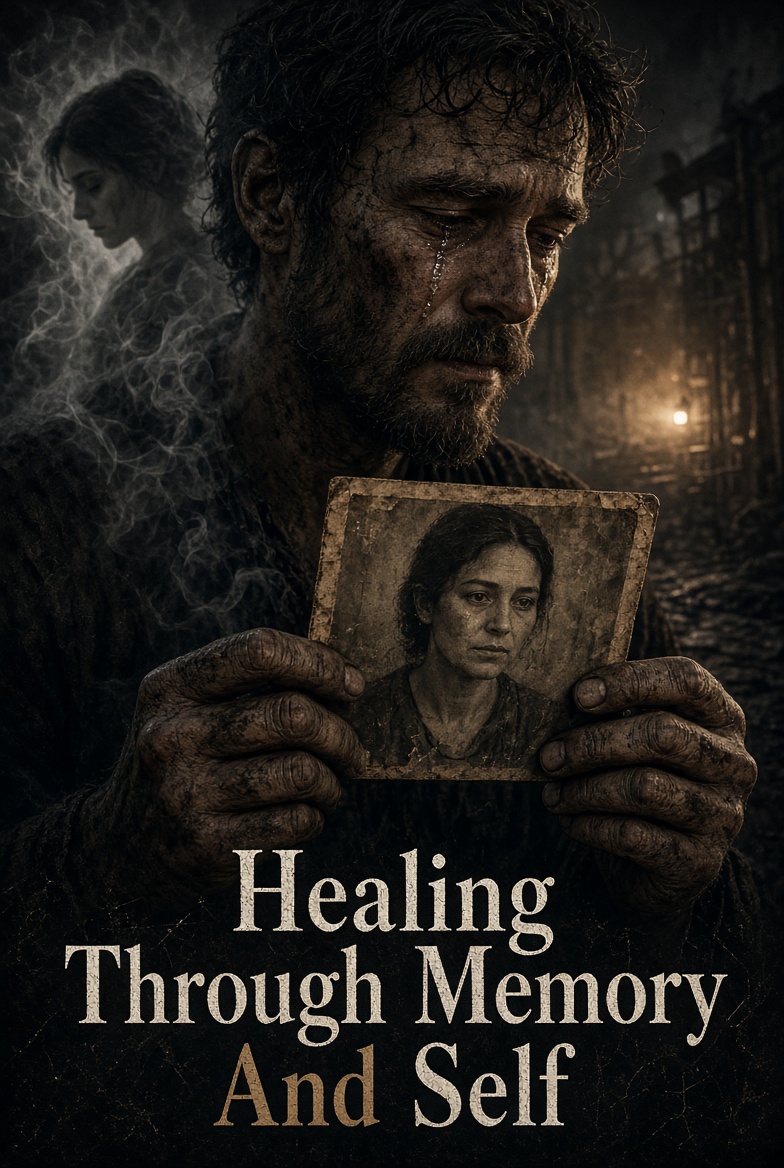
Pip: MVC The Next Chapter is doing something most blogs would flinch at — sitting with the uncomfortable stuff and refusing to look away.
Mara: This episode covers work from IAmMattVC across three territories: the guilt that comes with dreaming beyond your origins, the slow work of reclaiming yourself through solitude, and what it actually takes to heal from deep trauma. Let's start with family pain and the particular weight of working-class guilt.
Family Pain And Working-Class Guilt
Pip: There's a specific kind of guilt that doesn't get named much — the guilt of wanting something different from the life you were handed. That's the territory this segment lives in.
Mara: The poem sets it up through a vivid image of a mother, and the line that carries the whole thing is this: "The guilt of the working class, isn't the guilt of the working class. It's, actually, the guilt of those who dare even dream of escape."
Pip: So the guilt isn't about failing — it's about succeeding, or even just wanting to. The moment things start moving, something internal stops it dead. That's the pattern being named.
Mara: And the piece frames that pattern not as a moral failing but as programming — something that can be rewritten. It's Part One of a series, which means the reprogramming is the work ahead. That thread connects directly to the solitude and self-reclamation we're about to get into.
Reclaiming Self Through Solitude
Pip: If the guilt segment is about the trap, this one is about what happens when you finally land somewhere the trap doesn't follow you.
Mara: Walking Alone traces that landing precisely. The setup is years of assuming the problem was internal — and then, slowly, evidence to the contrary accumulates. The post puts it plainly: "As the years go on and the rejection doesn't happen, I've started to wonder… if… perhaps… maybe… it was the environment that was toxic. Not me."
Pip: That ellipsis-laden "if… perhaps… maybe…" is doing real work. It's not a triumphant realization — it's a tentative one, which is exactly how that kind of shift actually feels.
Mara: And the post is careful not to let that become a tidy self-help pivot. It pushes back directly on the idea that healing starts from within — arguing that stable external environments have to come first. If the floor was never safe, inner work can't get a foothold.
Mara: The companion piece, Walking Back To Me, carries the same idea into poetry — a grown man turning to find the child he once was, and the two of them finally meeting. It's the emotional image that Walking Alone earns through its argument.
Pip: Two formats, one reckoning. The prose makes the case; the poem makes you feel it.
Mara: Which is a reasonable way to describe what the next segment does too — except turned up considerably.
Healing From Past Trauma
Pip: This segment doesn't ease you in. It's Time opens by daring readers to stop reading — and uses that as a filter to find the ones who are ready.
Mara: The post names the hardest material directly and then offers a framework that refuses to be gentle about it: "To heal: you have to feel." But it immediately undercuts the cheesiness of that line — calling the actual process "a perilous hike into the dark mountain of truth."
Pip: The piece earns the rawness because it's not performing toughness — it's describing a specific, unglamorous experience of sitting inside the worst of it and not leaving.
Mara: What the post argues is that the capacity to stay with that darkness — to keep reading, to keep feeling — is itself evidence of something. The fact that you haven't looked away is framed as a signal of genuine resilience, not damage. The final address to the reader who made it through is direct: "You. Are. Marvellous."
Pip: After everything that preceded it, that lands.
Pip: Guilt, solitude, trauma — none of it wrapped up, all of it being walked toward deliberately.
Mara: That's the throughline. The next chapter, apparently, requires going back before you can go forward. More to come.
 MVC The Next Chapter
Leave a comment