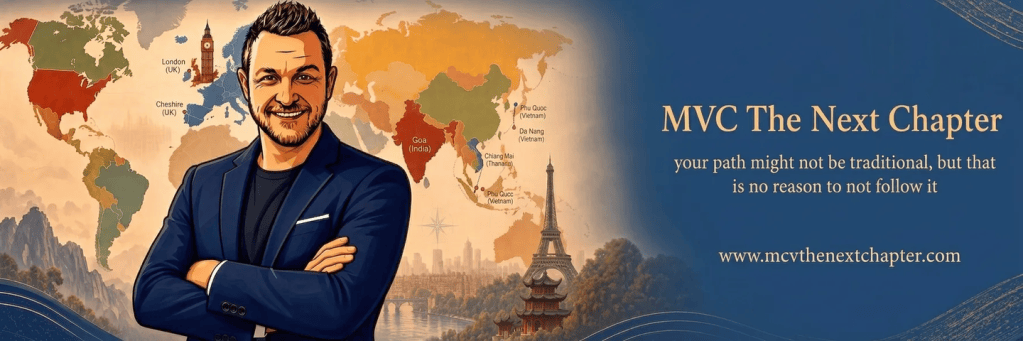
Pip: MVC The Next Chapter — where the blog post is less a lifestyle update and more a dispatch from somewhere most people are too busy pretending not to be.
Mara: IAmMattVC has been writing through some heavy territory lately — mental health, self-acceptance, and what it means to feel called toward something bigger than survival. Let’s start with the harder, more personal ground first.
Pretending Normal, Finding Strength
Mara: The central tension here is one a lot of people quietly live: the gap between saying “I’m not okay” and actually being honest about what that means — with yourself, not just with others.
Pip: The poem “Pretending To Be Normal Whilst Howling At The Moon” names that gap directly, and it doesn’t soften it. The setup is bleak and then it pivots hard: “Here’s the real bright side: when I accept my shit abnormality, when I stop listening to the agenda of others, as I embrace the sad reality that ‘the life’ I was planning has not happened and probably never will: I do, actually: feel a lot fucking better.”
Mara: That’s not toxic positivity — it’s almost the opposite. The feeling better comes after dropping the pretense, not before. The upshot is that radical acceptance, the unglamorous kind, is what actually moves the needle.
Pip: And the poem doesn’t let the reader off easy either. “It’s the same for everyone is the biggest lie, often told by those unaffected by the abnormality.” That line does a lot of work — it names the specific cruelty of well-meaning reassurance.
Mara: “The Eternal Pivot” extends this into lived consequence. A trigger mid-university-year — a bailiff’s letter, with a history behind it involving council tax enforcement and a prior crisis admission — retriggered a collapse. The response wasn’t denial; it was joining a men’s mental health group, increasing therapy, and taking concrete legal steps.
Pip: The pivot framing is doing something interesting there. It’s not rebranding failure — it’s treating course-correction as a repeatable skill rather than a one-time rescue.
Mara: “Her Withered Hand” reaches further back, into the grief and forgiveness around a mother’s death. The line that lands is what she said weeks before she died: “You’ve achieved so much. And you’ve done it with no support.” That recognition — that the isolation was real, not imagined — is what finally opened the door to forgiveness.
Pip: And the poem ends with a wink and a drive home. No resolution, no bow. Just continuing.
Mara: Which is maybe the most honest version of what healing actually looks like in practice — not an ending, just the next mile.
Pip: Speaking of what’s already there waiting — that idea of something inherent, not earned, runs directly into the next piece.
The Anointing
Mara: “The Anointing” asks a different kind of question — not how do you survive, but what if the permission you’ve been searching for was never something that needed to be granted from outside?
Pip: The poem puts it plainly: “The Right to pass were there all along: On the inside.” All the bells, the whistles, the deep dives into development — and the answer was interior the whole time.
Mara: What this means in practice is that the transformation being described isn’t an achievement or an arrival. It’s a recognition. The anointing is already done — the work is the diving inward to find it.
Pip: Which, after everything in the previous segment, lands differently. Survival, pivots, forgiveness — and then this: you were already enough for whatever comes next.
Mara: Across all of it — the howling, the pivots, the withered hand, the anointing — the thread is the same: honesty with yourself is both the hardest thing and the only thing that actually helps.
Pip: Next time, we’ll see where that honesty leads. More soon.
Sub for free…


Leave a Reply